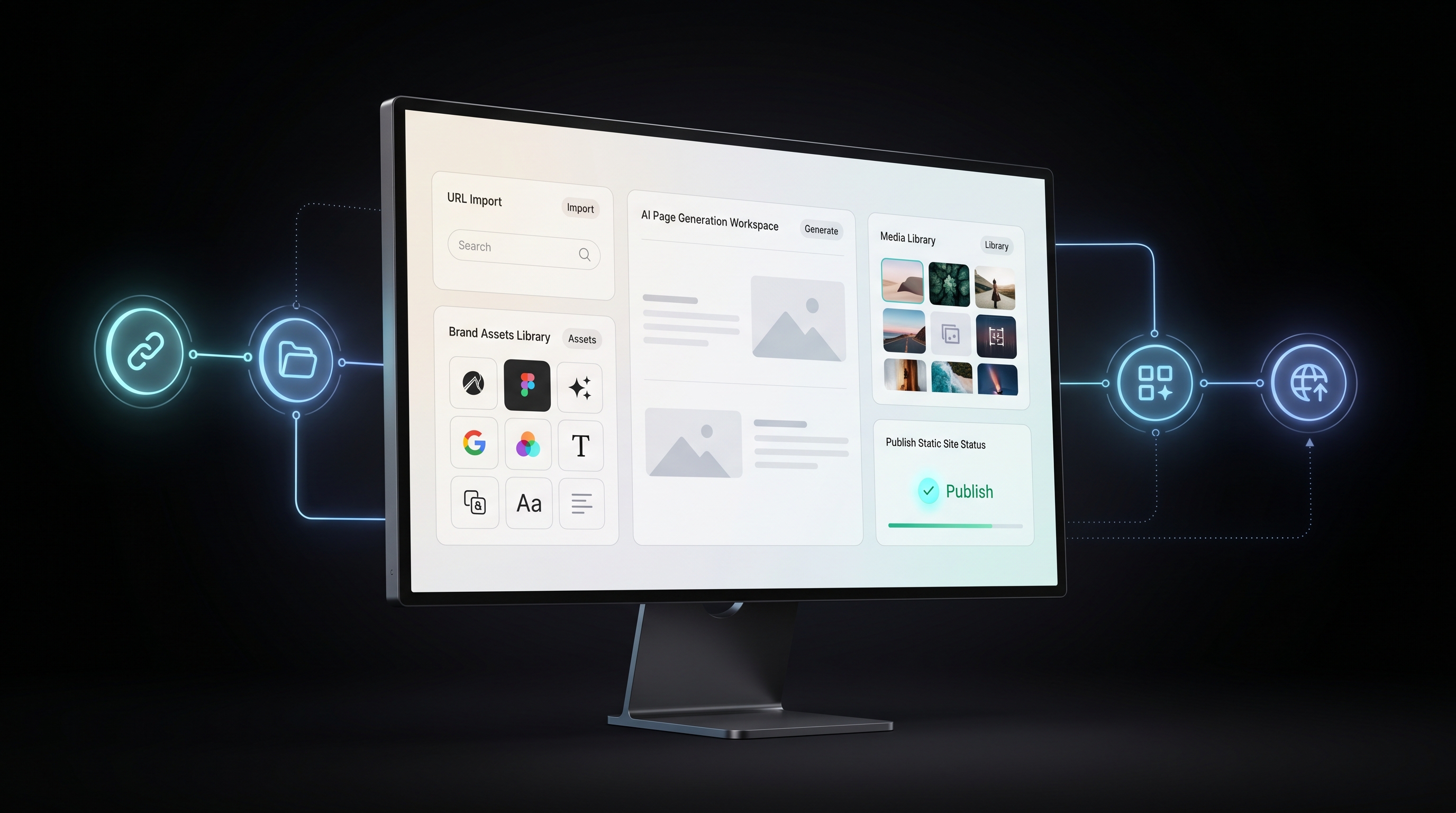
AICMS is built for AI agents that need to create, edit, and publish real websites without dragging every change through a fragile page-builder stack. The launch matters because most CMS workflows were designed around human editors clicking through dashboards, installing plugins, and manually checking whether a page still works after each update.
The core idea is straightforward: an AI CMS should give agents a structured place to import a site, understand the brand, generate pages, manage media, review changes, and publish clean public output. That is different from asking an assistant to paste content into WordPress or from using a one-shot page generator that leaves the team with a hard-to-maintain result.
The practical pain is not just writing copy. Teams need a repeatable workflow around agent-native CMS: collecting source material, preserving brand rules, creating page variants, reviewing edits, and pushing live pages without breaking the public site. AICMS treats those steps as one content operations system instead of a pile of separate tools.
In a traditional CMS, the public site and the editing environment are often tightly coupled. That creates risk. Plugins can conflict, themes can become stale, and small layout changes can depend on a chain of settings only one person understands. AICMS is designed around the opposite pattern: keep the CMS, assets, and agent workflow manageable while the public website can be deployed as a fast static surface.
The strongest use case is agent-assisted website production. An agent can start from a URL, pull in brand assets, draft a new page, adapt existing structure, and prepare the result for review. The human role becomes approval and direction instead of repetitive copying, resizing, and formatting.
That makes AICMS useful for:
This is also why AICMS is not simply another AI writing tool. It is aimed at the whole page lifecycle. The writing, media, layout, review, and deployment steps need to stay connected if teams want AI output to become production output.
AI agents are becoming capable enough to handle multi-step website work, but they still need dependable operating surfaces. Without a purpose-built CMS, agents end up pushing changes through systems that were never designed for autonomous workflows. That slows the work down and makes quality harder to verify.
AICMS gives those agents a better backplane. It can sit between the brief and the public website, keeping assets, instructions, generated pages, and publishing actions in a place that can be reviewed. For teams comparing WordPress, Webflow-style builders, and newer tools such as Cloudflare EmDash, the difference is that AICMS starts from the assumption that agents will be part of the production process.
The launch of AICMS is a signal that CMS software is moving from page editing toward workflow orchestration. The winning CMS for AI teams will not be the one with the most plugins. It will be the one that lets agents produce useful pages, lets humans inspect the work, and lets the public site stay fast and stable.
For teams that want a CMS built around that model, AICMS is now live at aicms.one. It is a practical step toward replacing manual website maintenance with structured, reviewable AI website operations.
Batch note: article variant 11.